

Crni Rižot: The Black Risotto of the Dalmatian Coast (With a Recipe to Try at Home)
Why Dubrovnik's black risotto is jet-black, where the tradition comes from, and a full recipe if you want to make it yourself once you're home.
Crni Rižot: Dubrovnik's Black Risotto
If you spend more than a day eating your way through Dubrovnik, you will run into crni rižot — black risotto, stained a deep, glossy black by cuttlefish or squid ink. It looks alarming the first time it arrives at the table. It is, by most accounts, one of the best things you can order on this coast.
What it actually is
Crni rižot is a risotto built the same way any risotto is — rice, stock, patience — but finished with the ink of cuttlefish (preferred) or squid. The ink is not a garnish; it is folded into the rice itself, along with pieces of the cuttlefish, so the color and the flavor come from the same source. Expect your lips and teeth to turn black while you eat it. Locals consider this part of the experience, not something to apologize for.
Where the dish comes from
The dish belongs to the wider Adriatic coast, from Istria down through Dalmatia, and its technique — rice slowly built up with stock, ladle by ladle — is recognizably related to Italian risotto. But it is worth being precise about Dubrovnik's own history here, because it is often flattened into a generic "Venetian Dalmatia" story that does not really apply to this city.
Dubrovnik was, for most of its history, not a Venetian territory but Venice's rival. Ruling itself as the Republic of Ragusa from 1358 until Napoleon dissolved it in 1808, Dubrovnik was an independent maritime republic — small, but wealthy and diplomatically skilled enough to trade across the Mediterranean, the Black Sea, and eventually as far as India, while staying formally at peace with both the Ottoman Empire and the great powers of Europe. It paid tribute to the Hungarian-Croatian crown and later the Ottomans to secure that independence, but it governed itself. The stone walls that still ring the Old Town were built to protect exactly that independence.
Ragusa and Venice were trading partners as much as rivals, and it is through centuries of that Adriatic-wide maritime contact — not political rule — that a dish like crni rižot spread along the coast and took root in Dubrovnik's own kitchens. Like much of Dalmatian cooking, its origin is a fisherman's economy: cuttlefish ink was a byproduct that would otherwise have been thrown away, and turning it into the base of a dish rather than wasting it is a very Dalmatian instinct.
Many kitchens on this coast still treat it as a seasonal dish, best from around April to June when cuttlefish is most plentiful — though on a menu built for travelers, you will usually find it year-round.
Where to find it in Dubrovnik
This isn't a rare or hard-to-find dish here — it is closer to a baseline test of a kitchen's seafood cooking. A few restaurants in our directory list it as a genuine specialty rather than a menu formality; see the linked restaurants on this page for where to start, including a konoba inside the Old Town walls that has built its reputation partly on this dish.
Try it at home
If you want to bring a version of the coast back with you, the recipe below is a standard, fairly faithful version of what you'd be served here. Fresh cuttlefish ink is worth seeking out if you can find it; if not, it is sold jarred in most well-stocked delis.
A worthwhile detour: Zaton Bay
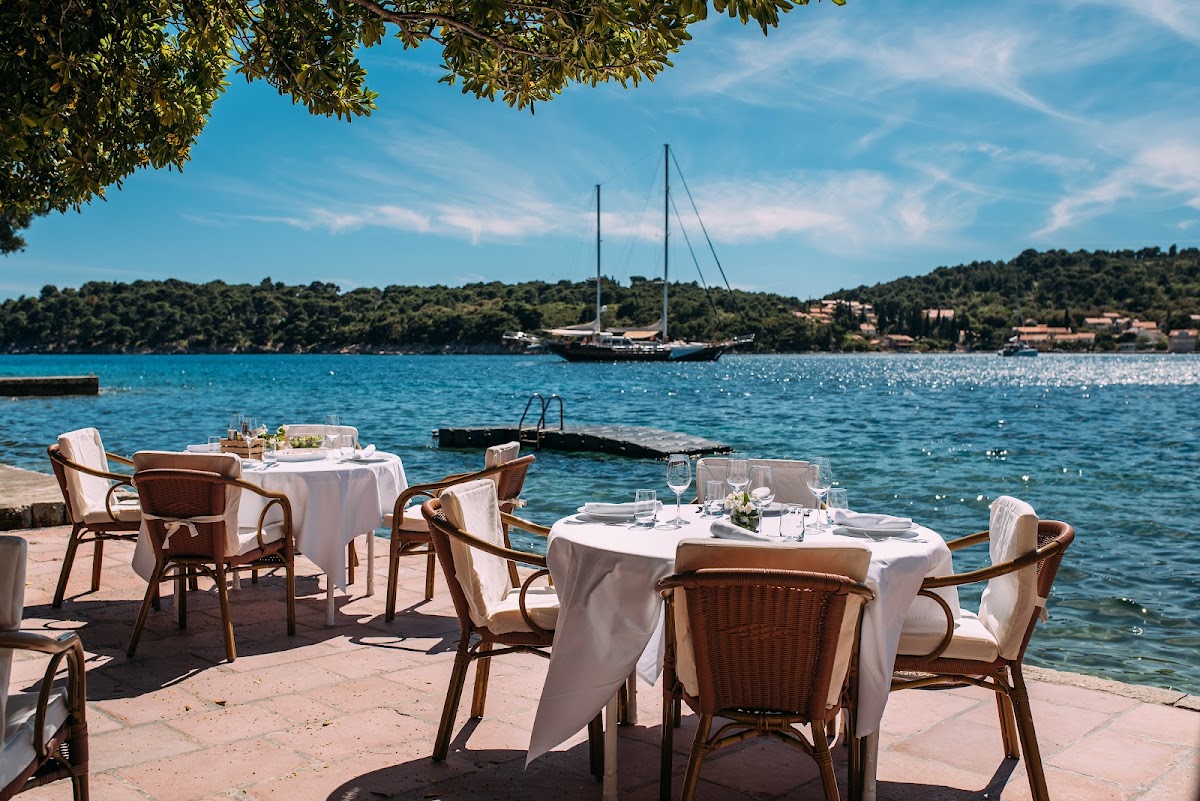
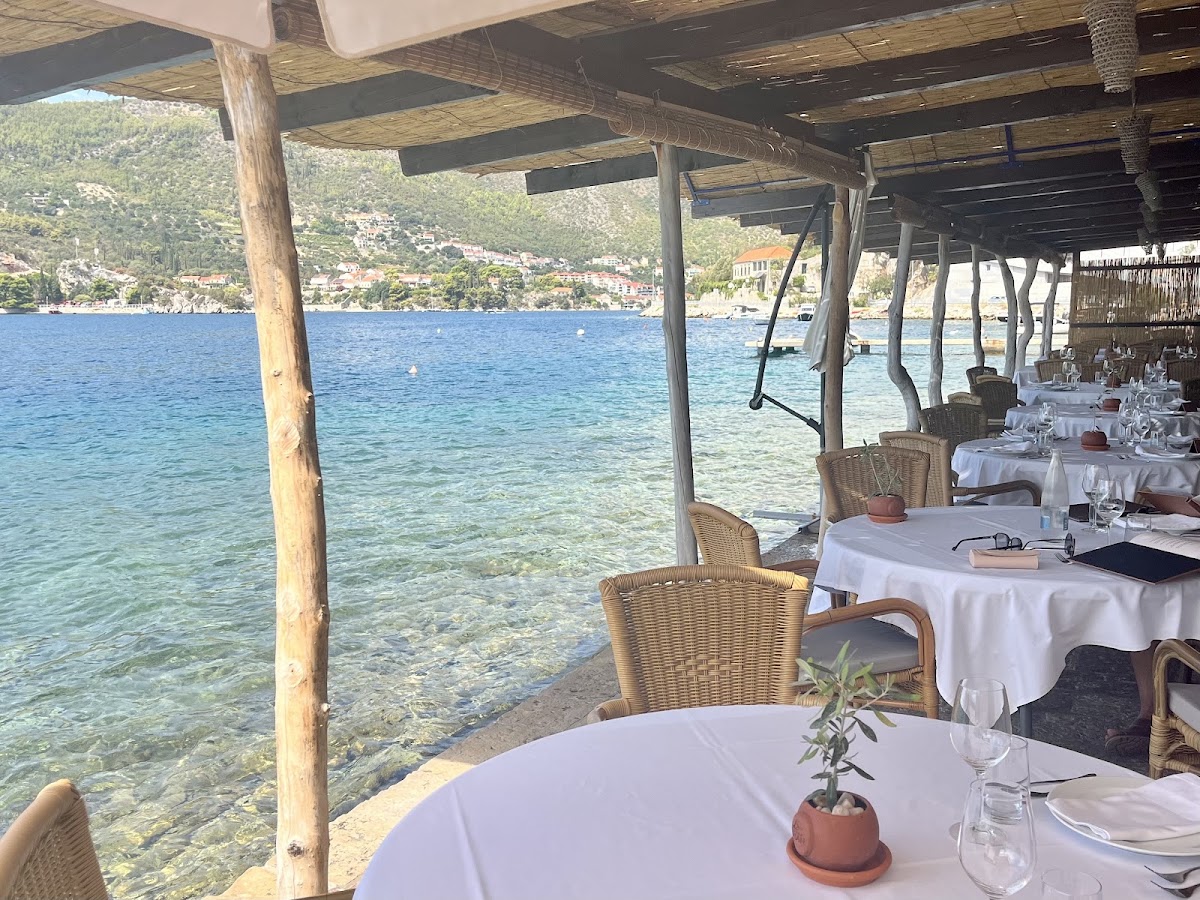
Eight kilometers northwest of the Old Town, the fishing village of Zaton is where some locals will tell you the best version of this dish actually is — including at a family-run restaurant that has been serving its own "Orsan" black risotto since 1966. It's a proper trip out, not a walk from the walls, but it's the kind of detour this dish has always been worth.
Crni Rižot (Black Risotto)
A traditional Dalmatian risotto made with cuttlefish and its own ink, giving the dish its distinctive black color and briny depth.
Ingredients
- 500g cuttlefish (or squid), cleaned and cut into small pieces
- 2 tablespoons cuttlefish or squid ink
- 320g Arborio or Carnaroli rice
- 1 large onion, finely chopped
- 3 garlic cloves, minced
- 3 tablespoons olive oil
- 100ml dry white wine
- 1 liter fish or seafood stock, kept warm
- 2 tablespoons chopped parsley
- Salt and black pepper, to taste
- Grated Parmesan, to serve (optional)
Instructions
- Clean the cuttlefish and cut it into small pieces, reserving the ink if you are working with fresh cuttlefish.
- Heat the olive oil in a wide, heavy-bottomed pan over medium heat. Add the onion and cook gently until soft and translucent, about 5 minutes.
- Add the garlic and cuttlefish pieces, and cook for 3-4 minutes, until the cuttlefish turns opaque.
- Add the rice and stir for 1-2 minutes, until the grains are coated in oil and slightly translucent at the edges.
- Pour in the white wine and let it simmer until mostly absorbed.
- Stir in the cuttlefish ink until it is evenly distributed through the rice.
- Add the warm stock one ladle at a time, stirring frequently and letting each addition mostly absorb before adding the next. This should take 18-20 minutes, until the rice is creamy but still has a slight bite.
- Season with salt and black pepper, and stir in the parsley just before removing from the heat.
- Serve immediately, with grated Parmesan on the side if you like.
Gverović – Orsan | Štikovica
“Black Risotto "Orsan" — a family recipe since 1966”
Black risotto "Orsan" has been this family-run restaurant's signature dish since 1966 — often cited as the version other kitchens are measured against.
Lucin Kantun Dubrovnik
“Black risotto with squid ink”
Their black risotto with squid ink is the restaurant's signature dish — a straightforward, well-executed version worth starting with.
Public Old Town Croatian Bistro
“Homemade Gnocchi with Beef Cheeks”
Serves black risotto alongside duck meatballs on a menu built around Croatian coastal classics.
Konoba Kasar
“Seafood risotto and octopus, with homemade bread and their own olive oil”
A quieter, family-run konoba in Zaton known for its seafood risotto and homemade bread.